There are some encounters we can’t wait to have and share. Yet they sometimes take longer than expected to come to fruition. Elsa and I have been in touch for quite some time now. This interview project first took shape during drinks in Idar-Oberstein, a few kilometres from where she lives. In the meantime, life has delayed the publication of this project. So, I am more than delighted to be able to bring you this interview today with one of the most talented gem cutters of her generation. Primarily a gem carver, she knows better than anyone how to reveal the secrets of gemstones and transform them into fabulous sculptures. The interplay of materials, effects of transparency and the poetry of inclusions bear witness to her love of materials and her sensitivity to the magic of nature. An encounter with a mineral lover whom nothing can stop!
1-Could you introduce yourself in a few words to our readers?
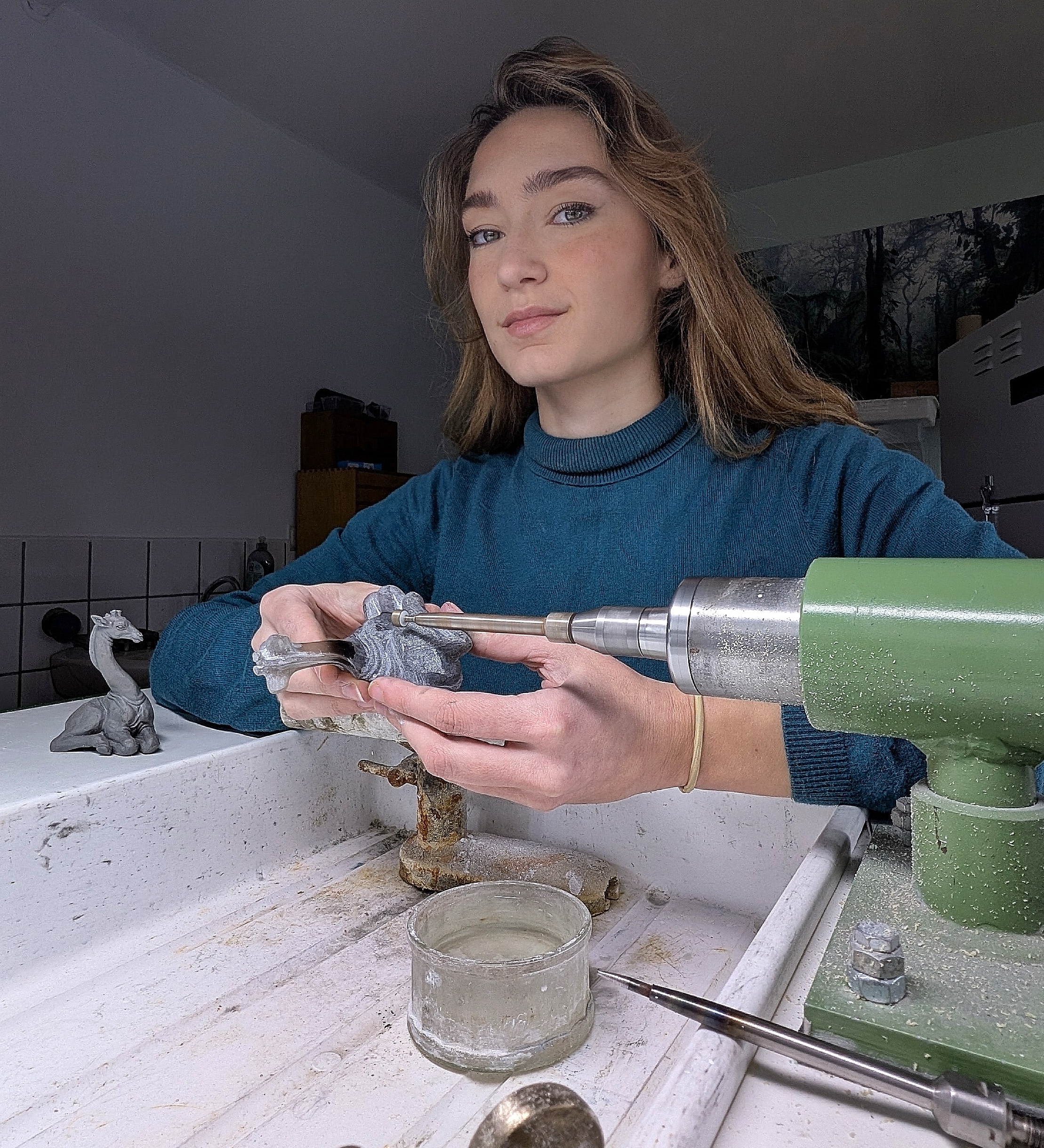
My name is Elsa Marceau, I’m 28 years old, and I’m a gemstone carver, specialising in sculpture and engraving on precious stones, a discipline known in English as ‘gemstone carving’.
2- Before we talk about what you’re doing now, here’s a question I ask all my guests: what did you want to be when you were little? And what do you do now?
As a child, I didn’t have a specific career in mind, but I was drawn to creativity, jewellery, drawing and sculpture. I was a dreamer, and I needed to express that creativity through hands-on activities. My imagination led me to experiment with shapes and materials. Today, I devote myself to glyptics, an art form where I can bring my ideas to life by carving and engraving directly into stone.
3- Your career path is quite impressive; what is your background and how did you end up in the field of stone carving, and more specifically glyptics?
Sculpture, jewellery and gemstones have always been a part of me. As a child, I was already passionate about creating jewellery using all sorts of materials. Clay modelling led me very early on to develop a mental visualisation of forms. I didn’t practise regularly, but once a year I would enter a short period of intense sculpting. At 17, I left my hometown to study jewellery in Paris — a decisive step that marked my total commitment to this path. Over the years, I realised the value that sculpture held for me, and how much I was drawn to exploring new materials such as stones, beyond metal and wax, to fulfil this need. This discovery sparked a deep fascination with the choice of materials, experimenting with colours, transparency and opacity — all to enrich my ideas.
My professional career began in one of the finest gemstone workshops: Atelier Lemercier. How did I get there? Initially, they offered me a one-week trial during the school holidays. Two weeks later, I was still at the workshop, learning: I had found my passion. It was a revelation — as if my hands instinctively knew how to move the stone across the tools. At Lemercier, I was trained in the technique of ‘taille sur œuvre’ — the art of cutting stone elements so that they fit perfectly into the metal cavities that make up a piece of jewellery. This work is mainly carried out for the high-end jewellery houses on Place Vendôme, and I practised it for six and a half years. This period was fundamental: the exacting standards, precision and level of finish I learnt there are now ingrained in me, and are reflected in my gemstone carving work.
My foray into gemstone carving began during lockdown; I loved being alone at home, face to face with my stones, my lathe and my ideas. At the time, I had no knowledge of the techniques, and I could find no resources. So I asked myself: how could I make my own tools? How could I create the microscopic instruments needed to produce these tiny intaglios that fascinate me? I experimented extensively over entire weekends and late into the night; that is how I taught myself this new craft.
This passion eventually led me to leave my life in Paris and settle in Idar-Oberstein, in search of even deeper training. It was in this context that I was introduced to a glyptician/carver, the custodian of knowledge passed down through generations. This workshop is dedicated exclusively to sculpture. The work carried out there involves neither intaglio nor cameo; it is a type of work involving the removal of significantly larger volumes of material. This type of sculpture requires the use of large quantities of water and generates a significant amount of waste. In practice, engravers generally specialise either in sculpture or in intaglio and cameo work, as these approaches involve different volumes of material and different tools.
For about a year, he advised me on certain tools and allowed me to pre-shape large rough pieces in his workshop, as I wasn’t yet sufficiently equipped at the time. I would then return to my own workshop to continue the carving, learning in my own way through experimentation.
4- From your perspective, what are the major challenges facing your sector?
A current challenge in gemstone carving concerns technology. 3D tools now make it possible to generate models intended for machining. However, this does not undermine the importance of manual skill: at present, it is not always possible to achieve a fully finished piece using machines alone, and the human touch remains essential. The difference between a machine and a human lies in the ability to feel the material: to perceive variations in hardness, adjust the pressure applied during carving and anticipate risks, in order to avoid, for example, the formation of splinters. Every material reacts differently.
Depending on production volumes, companies tend to favour options that prioritise profitability over manual craftsmanship. As far as I’m concerned, this isn’t a problem, as my work isn’t part of a repetitive production process and focuses on creating unique pieces. People who come to me are looking for a hand-crafted object, driven by an admiration for a craftsmanship that remains rare. It is true that those drawn to gem-carving are, by nature, driven by creativity and a sensitivity to the craft; a rough-cut produced by a machine considerably diminishes the interest and charm of this ancient craft. For me, an essential part of glyptics lies precisely in the construction of form; delegating this stage to a machine would remove a fundamental dimension of the creative process and the technical challenge that, in my view, makes this craft so compelling.
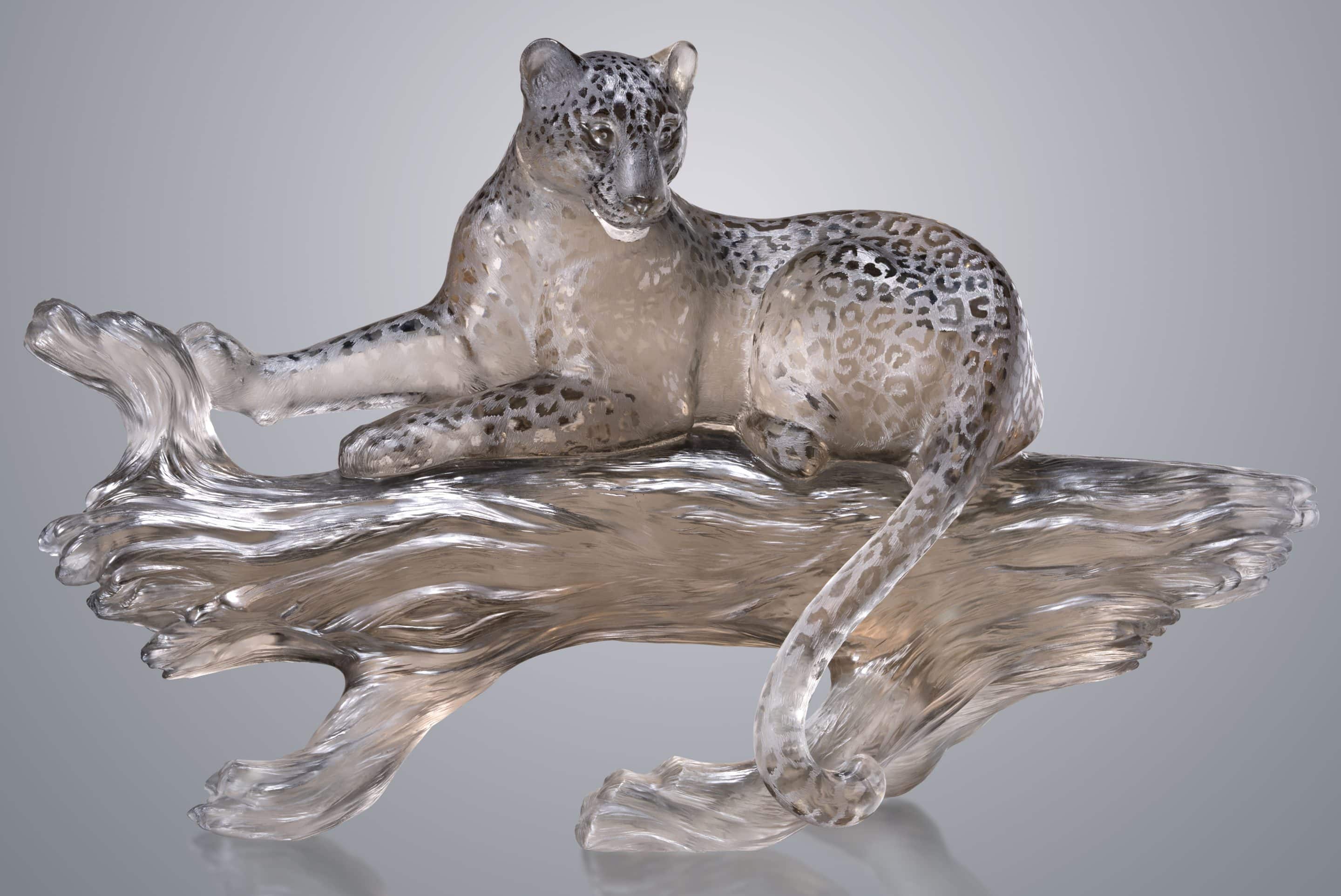
In recent months, some of my creations have begun to find their place among private collectors. Alongside my work on commissioned pieces and subcontracting in gem-cutting, which still forms part of my business, I am gradually devoting more time to developing this personal work. These are works of art whose design and creation require a considerable amount of time, with carving such pieces potentially taking several hundred hours.
Another challenge in the field of glyptics, particularly when it comes to carving, concerns the supply of raw materials. It is becoming difficult to source large blocks of stone of sufficient purity to be carved with ease into pieces of around 10 cm, for example. The scarcity of these materials, combined with the fact that they are highly sought-after yet not readily available in sufficient quantities, makes their acquisition more complex and directly influences creative possibilities depending on their shape and dimensions. This is precisely why, in this discipline, the material often dictates the subject of the sculpture. As for agate cameos, the historic deposits at Idar-Oberstein have long since been exhausted. Agates naturally consisting of two distinct coloured layers, which were traditionally used to create cameos, can therefore no longer be obtained naturally today. It is for this reason that dyeing processes have been developed to artificially recreate this chromatic layering within a single block of stone: the Nicolo.
Another major challenge concerns the transmission of expertise. In France, there is currently no institution dedicated to teaching gemstone carving using traditional techniques. For a long time, however, a specific course of study existed at the École nationale supérieure des Beaux-Arts in Paris, through a workshop specialising in engraving on semi-precious stones. This course, which no longer exists, was closed in the 1990s, marking the end of any structured national training dedicated to glyptics and leaving this discipline without an official framework for transmission in France. In Idar-Oberstein, opportunities for learning do exist, but the transmission of this knowledge relies on a long-term commitment and a strong local presence. The constraints associated with geographical isolation, language and the region’s unique way of life can make this prospect more uncertain, particularly for young practitioners from abroad, when they have not yet fully settled in the country. In this context, it was not possible for me to join a workshop to undertake in-depth training. I therefore continued my learning independently, through daily practice, experimentation and observation, gradually developing my own methods and a direct relationship with the material.
5- What would you say to someone who is unfamiliar with cameos and intaglios to encourage them to appreciate and wear them?
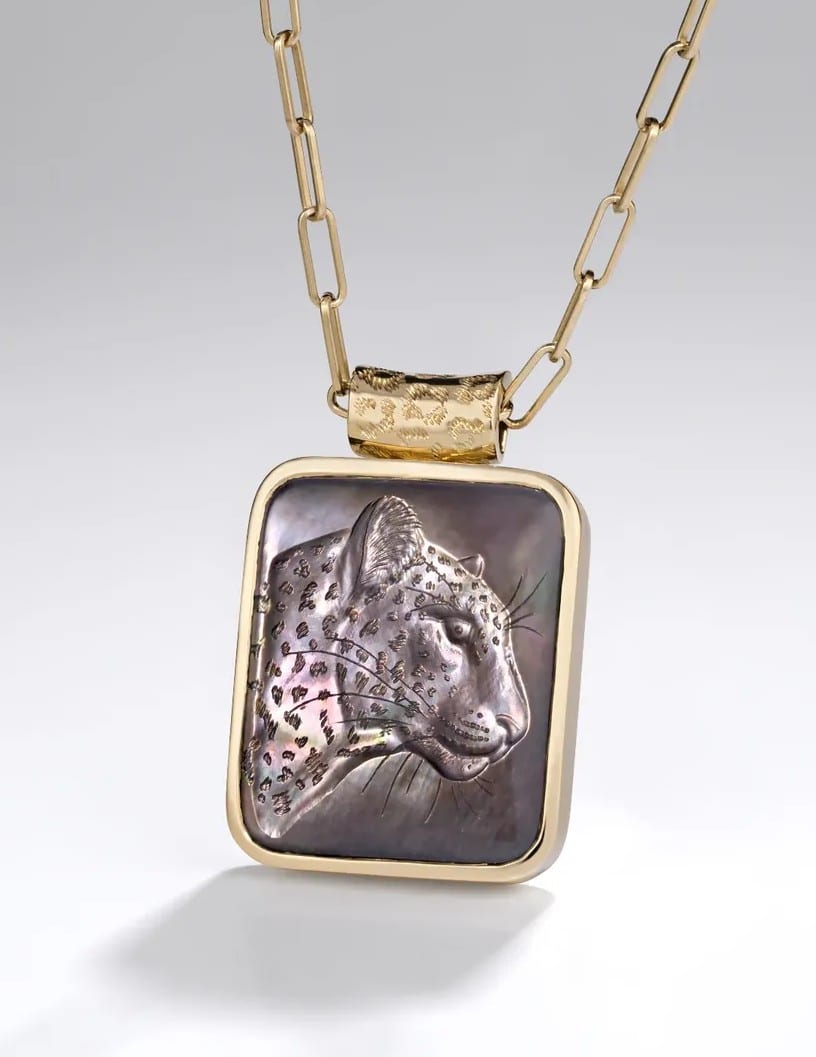
There are endless possibilities with intaglio and cameo techniques; they offer immense freedom. They are not necessarily tied to traditional imagery, such as portraits or family crests, but can certainly be used for contemporary designs. There is no better way than engraving a stone to create a distinctive, personalised and unique piece of jewellery. Above all, it is a way of imbuing the piece with deep, personal symbolism and creating a genuine connection with the object. The engraving is made in a material that does not change over time, unlike metal which can be melted down: the gesture and the symbol are thus permanently inscribed. A piece of jewellery made for oneself, imbued with meaning and resonating with who one is.
6- Do you have an anecdote to share about your journey? A story that has left a lasting impression on you in recent years?
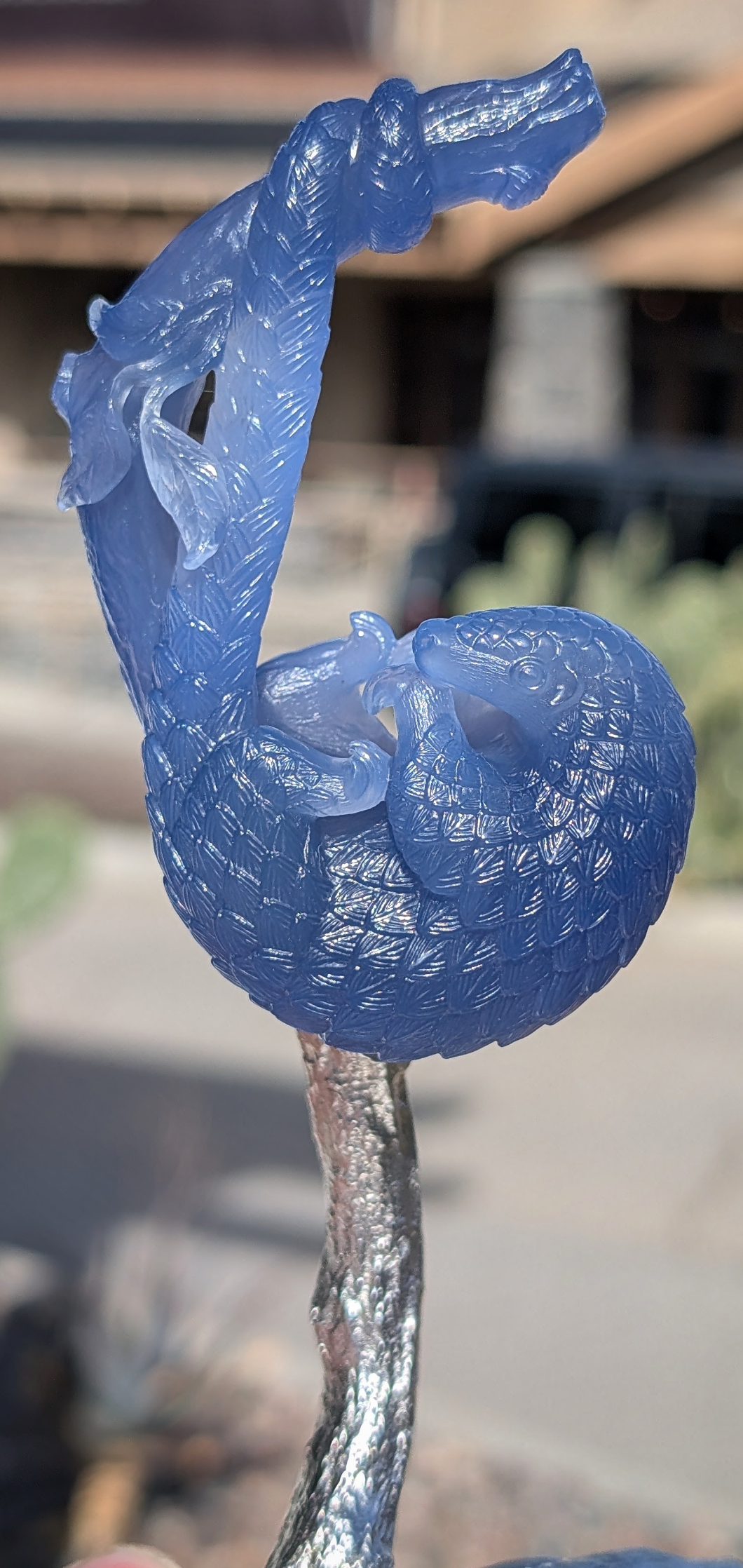
Three years ago, I had the opportunity to exhibit at the Tucson Fine Mineral Gallery to showcase my first carvings. Faced with logistical constraints – as I had to follow this up with a trip to Costa Rica – I had to find a solution quickly. It was then that, almost miraculously, I was put in touch with a gem and mineral dealer exhibiting in the neighbouring gallery. To help me out, he took the time to explore my work, which led him to offer me my first commission for a sculpture using his own material: a blue chalcedony from Madagascar, of exceptional quality.
7- How do you view the industry and its future?
I tend to believe and hope that, with the development of new technologies, handcrafted work and unique pieces will become even more valuable and attract greater interest. I am regularly asked if my work is handmade, and I often notice the surprise when I reply in the affirmative. In this technological age, it has become difficult to imagine that such meticulous creations can still be entirely crafted by human hands. I believe there will always be passionate people; once introduced to it, they perceive, admire and seek out the richness of entirely handmade craftsmanship. I hope that the industry as a whole will make more room for collaborations based on creative dialogue and recognition of craftsmanship.
8- Which is your favourite brand and why?
Boucheron is my favourite brand because they innovate and experiment by moving beyond traditional jewellery techniques and craftsmanship. I identify strongly with their creativity, which closely aligns with the aesthetics I seek in my own designs and my approach to experimenting with materials.
9- Finally, what advice would you give to a young person wanting to work in this sector? Which direction should they take? Which path should they choose?
I would advise them to practise drawing and working with volume. Working with plasticine and wax are good ways to practise volume and are essential before transferring that volume onto a material such as stone, where there is no room for error. Practise with diamond burs and a micromotor. With water! I’d like to remind you that silica dust is very dangerous for the respiratory tract.
Your perseverance will reflect the quality of your work. Take nothing for granted. Auch du kannst vieles besser machen: you can always do better and push your limits. Which path to choose… I don’t really know how to answer that. I went through an apprenticeship in on-site fitting; understanding the materials and tools specific to this type of work then allowed me to develop my own tools, in order to achieve the level of detail I was looking for.
Try your luck by knocking on the doors of workshops in Idar? Provided you speak German, why not give it a go… The problem is, as everywhere else, it’s not at all easy to find someone who can afford to devote a huge amount of time and years to training you, until you become profitable, only to potentially see you leave for your home country afterwards. Because in Idar-Oberstein, the pace of life is much more relaxed, a far cry from the hustle and bustle and opportunities offered by a big city.
10- What do you enjoy about practising glyptics?
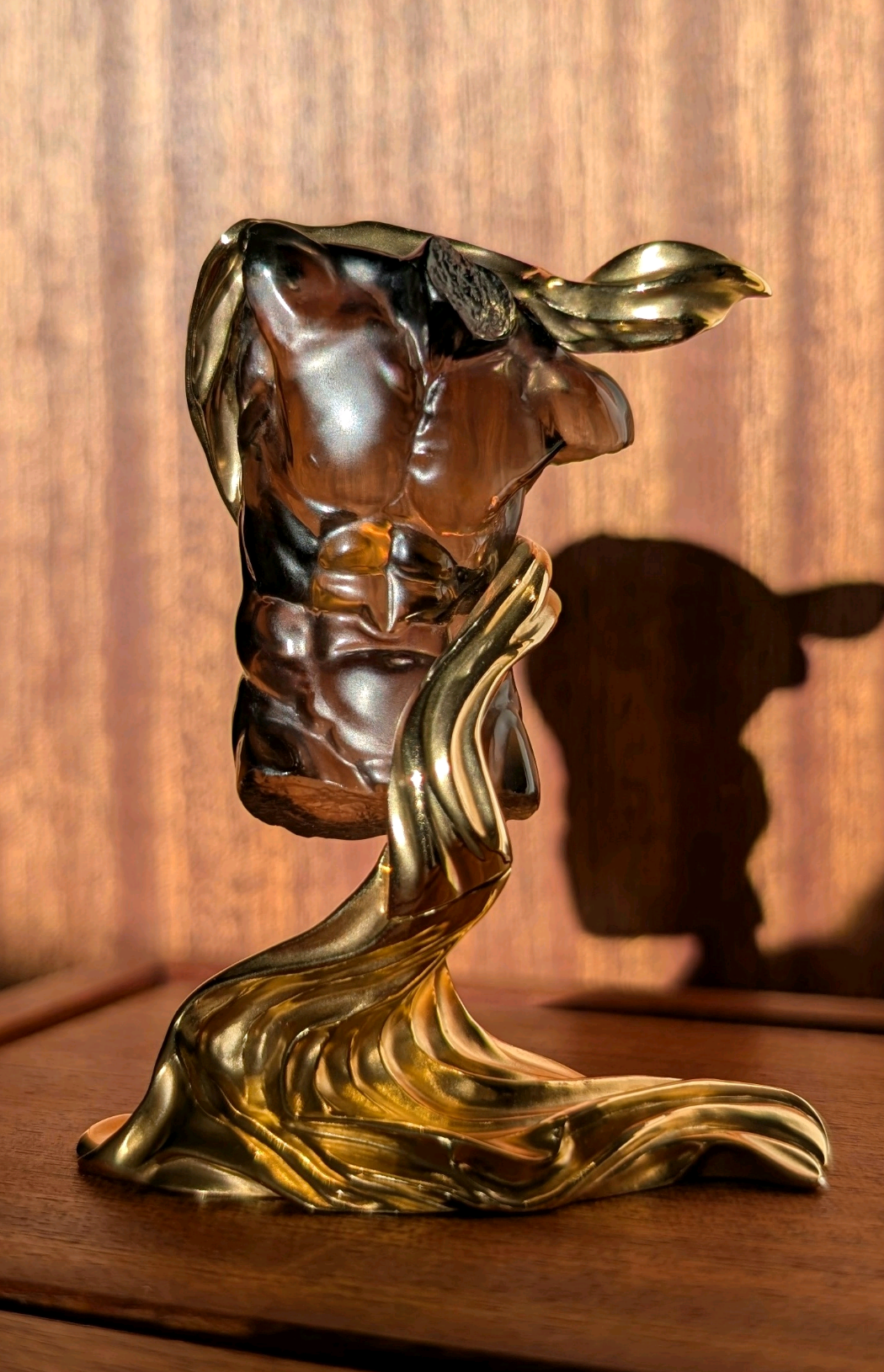
What I enjoy about practising gemstone carving is the variety of challenges it presents. Unlike modelling, where material can be added or corrected endlessly, working with stone relies solely on subtraction: every stroke is final, with no possibility of going back. Each stone presents specific constraints that one must learn to understand and anticipate. Reading the material, identifying its stresses, inclusions or weaknesses requires time, experience and constant practice. Even with great skill, certain stones retain an element of unpredictability. Managing to work around a flaw or an unexpected inclusion, whilst preserving the balance of the form and the quality of the material, is a source of real satisfaction.
Tools and techniques must be adapted to each material, depending on its hardness and how it behaves during polishing. The same stone can react very differently depending on its geological origin: two chrysoprases from different deposits may, for example, require opposite polishing approaches. Some materials can withstand heat, whilst for others it must be avoided.
Experimentation plays a central role in my practice. Stones offer an infinite wealth of possibilities, particularly through their inclusions, colour variations or natural strata. The direct contact between the abrasive tool and the stone leaves plenty of room for intuition, whilst demanding constant adaptation to the material and formal rigour, particularly in the accuracy of volumes or anatomy. Finally, I deeply appreciate the unique character of each creation. Bringing a stone to life, giving it a function, transforming raw material into a singular object is an integral part of my approach. The physical engagement with the work — getting dirty, handling the stone, the abrasive, the water and the oil — plays a full part in this direct and committed relationship with the material.
11- What are the fundamental differences with stone carving? Do you consider glyptics to be a branch of this art or an art form in its own right?
The differences between glyptics and stone carving are both technical and conceptual. Stone carving, in its strictest sense, corresponds for me to faceted cutting: a practice based on geometry, the precision of angles and the repetition of facets, whose main objective is to optimise the reflection of light.
Although diamonds are a common element — used in the form of grains or powder depending on the cutting or polishing stage — the tools, machinery and processes differ significantly. The skills required are not the same either. Facet cutting relies above all on geometric and technical abilities, now often supported by software that guides the cutting of facets, optimises proportions and ensures high precision in execution. Glyptics, by contrast, involves a sculptural approach. It requires mastery of design and volume, as well as a degree of artistic interpretation unique to each practitioner. The stone is not viewed as a canvas for facets, but as a form to be created through subtraction.
This distinction is also reflected in the relationship with the materials. It is more common to facet gemstones — such as rubies, emeralds and sapphires — from small rough stones, whilst carving and engraving mainly involve ornamental stones, such as blue chalcedony and rock crystal, which are generally worked from larger rough stones. However, when it comes to carvings, collectors particularly appreciate pieces crafted from exceptional specimens of tourmaline, beryl (notably aquamarine, heliodor or morganite) and topaz. When the crystal faces are no longer perfectly intact, the question of carving naturally arises. Fully preserved specimens, on the other hand, are generally kept as they are for the collection.
Between these two practices, carving on the stone occupies an intermediate position. It differs from traditional faceted cutting without fully falling under the category of glyptics, and can be understood as a middle ground, situated on the boundary between geometry and sculpture.
In this sense, I consider that glyptics is not a branch of lapidary art, but forms part of the broader art of stone carving, with its own distinct identity and approach.
12- What inspires you in your daily work as a glyptic artist?
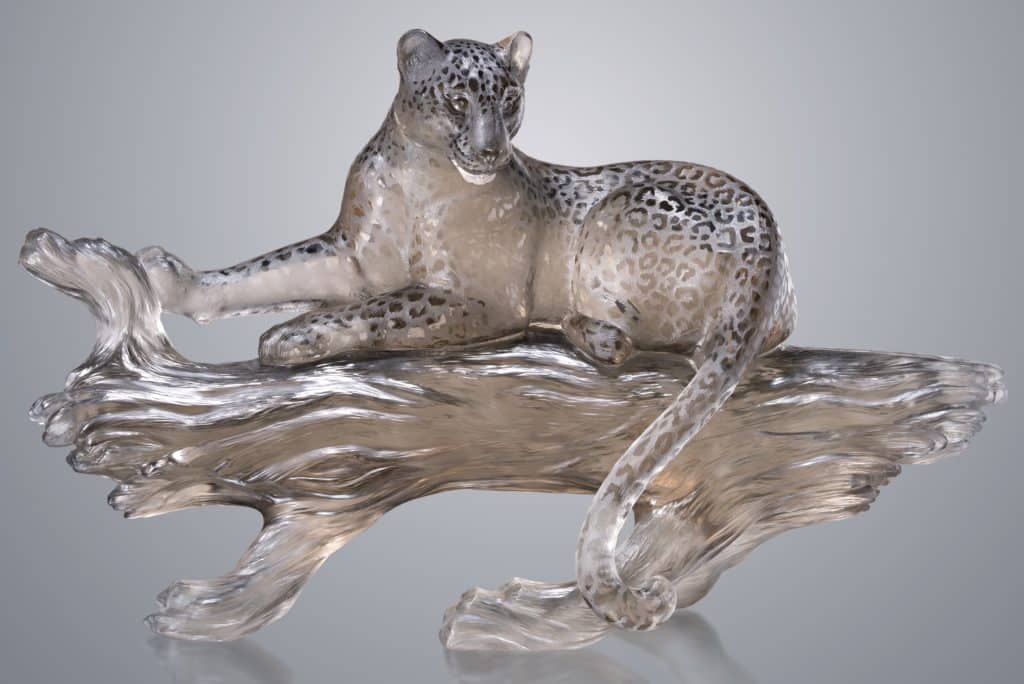
Nature is an inexhaustible source of inspiration for me and fascinates me just as much as glyptics itself. It has therefore always seemed obvious to me to create a dialogue between these two worlds and to merge them. I have also always wanted to combine sculpture and jewellery, two practices that are inseparable in my eyes. Glyptics has emerged as the ideal discipline for me to fully express myself by bringing these two fields together.
I also have a personal vision of glyptics, fuelled by a desire for innovation. Whilst ancient styles are a major reference point that I deeply appreciate, my work is not driven by a desire to reproduce them. My inspiration turns to other themes and forms, driven by a desire to offer a contemporary interpretation, to explore new directions and to invent rather than repeat what has already been done.
13- What feedback do you receive from your clients, and why do they turn to gemstone carving?
Clients come out of admiration for the craftsmanship and a desire to bring their ideas and jewellery to life, to develop their creativity, to experiment with different materials and to create a unique, deeply personal piece of jewellery, outside the traditional conventions of gemstones.
14- Which material do you prefer to work with and which do you like the least? Is there a material you dream of working with one day?
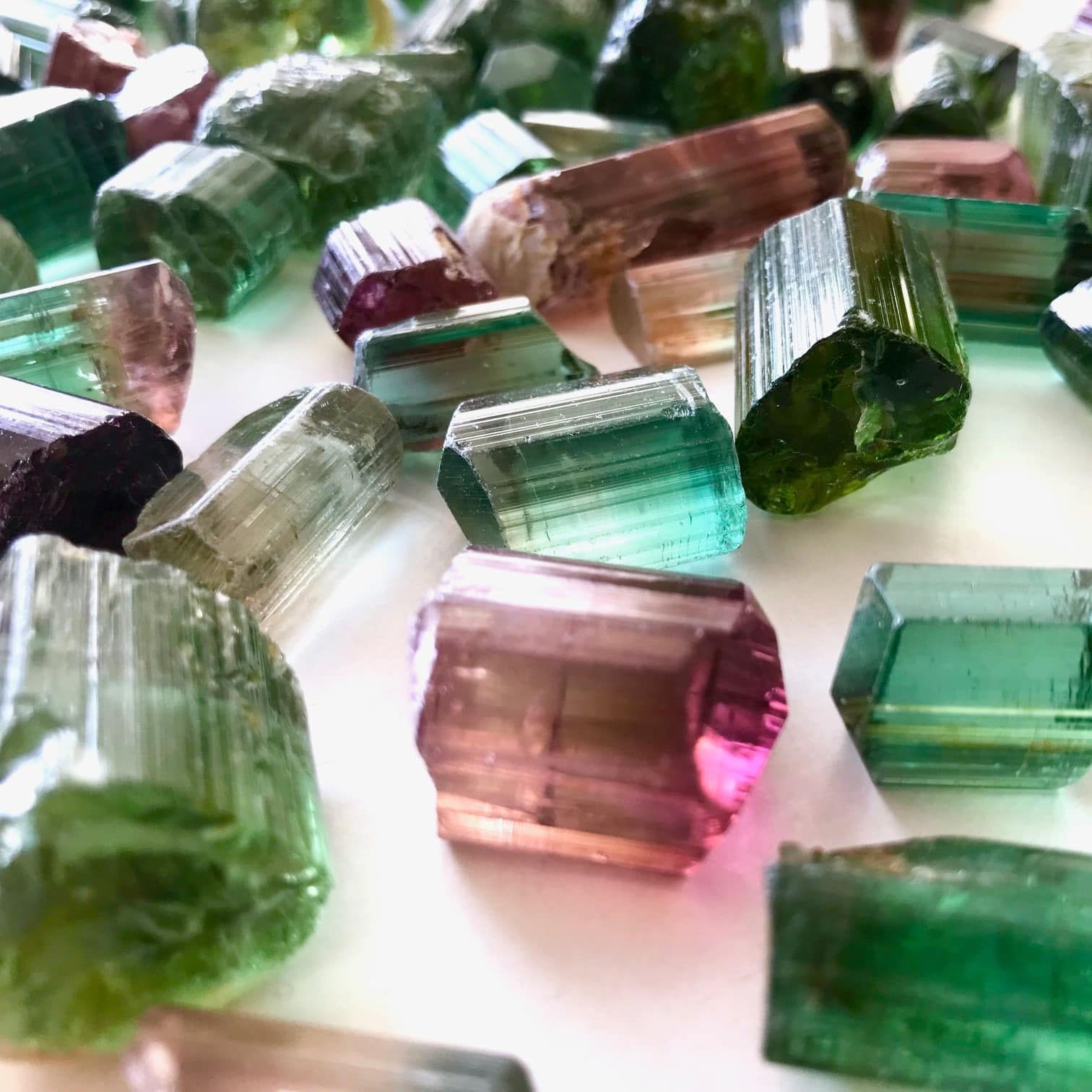
I really don’t like malachite, because of its colour and fragility, and I avoid cutting it as much as possible as it is toxic. The materials I dream of cutting are indigolite and verdelite tourmaline, jadeite jade, topaz and aquamarine.
15- Which figure from the history of glyptics would you have loved to meet, and why?
I would have loved to meet those anonymous Egyptian craftsmen to whom we owe the first cylinder seals and scarab seals. And the famous Pyrgoteles, Discorides and Tryphon, who left their mark on the history of gem-cutting and contributed to its rise. I would have loved to meet the first generations of sculptors and engravers from Idar-Oberstein — such as the Dreher family — who developed and passed on this craft, and who collaborated with Fabergé alongside the Russian workshops in the late 19th and early 20th centuries.
16- If you were to gather several figures from the world of gemstone carving around a table for the perfect dinner, who would they be?
To strike the right balance between craftsmanship and diversity of artistic worlds, I would have invited Michael Peuster, Andreas Roth and Patrick Dreher.
17- Finally, if a prospective client wishes to meet you, how should they go about it?
They can contact me by email at elsa(dot)marceau(at)outlook(dot)fr, on Instagram @elsa.marceau, by WhatsApp on 33670875756, or at international trade fairs. I’ll actually be attending GemGenève in a few days’ time.
See you soon!