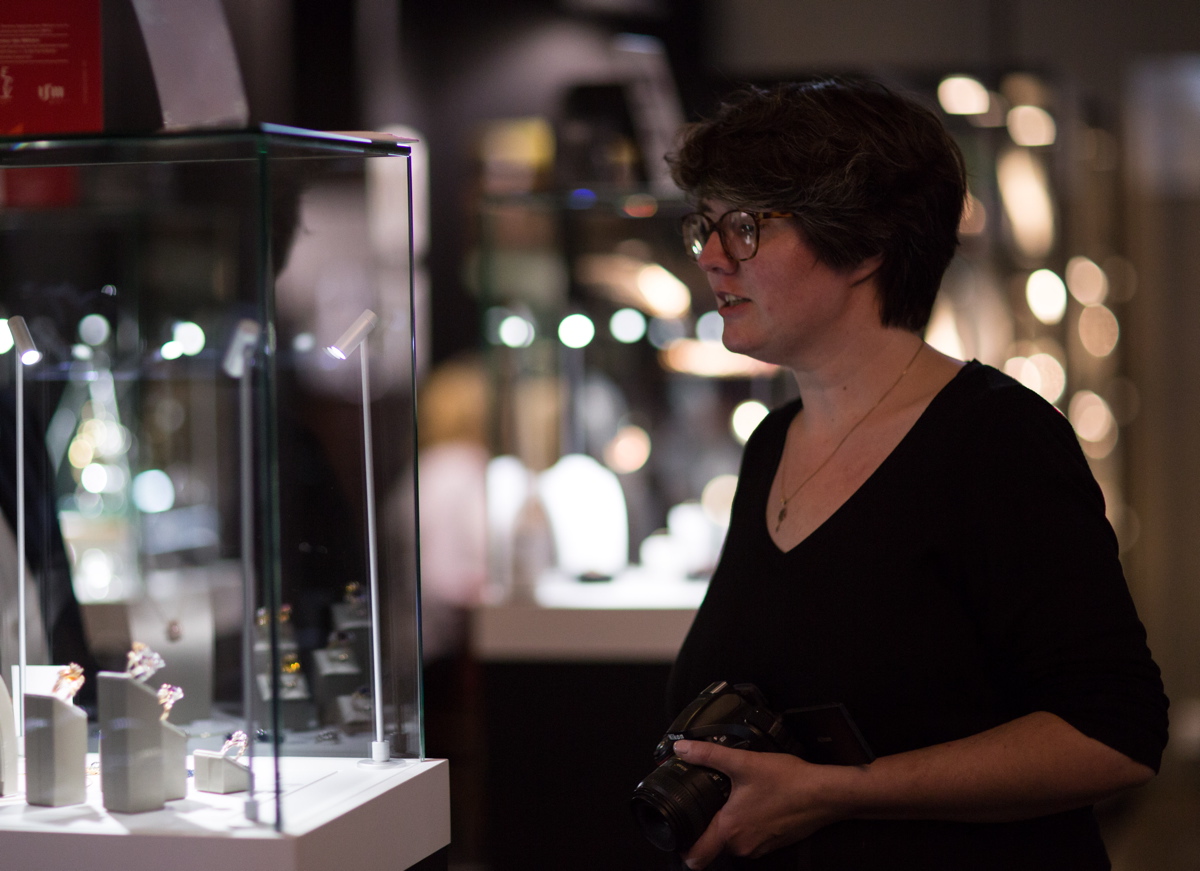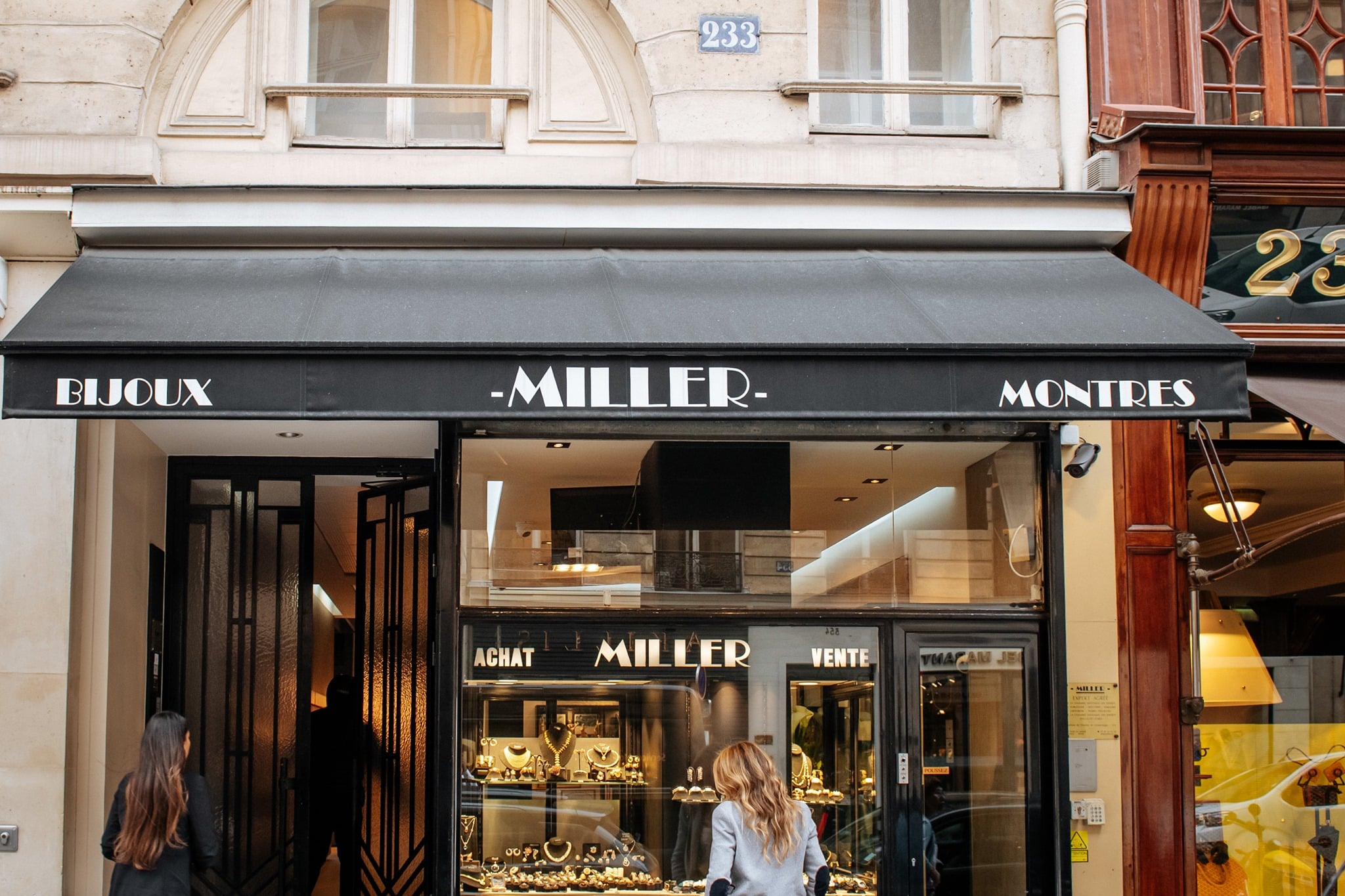
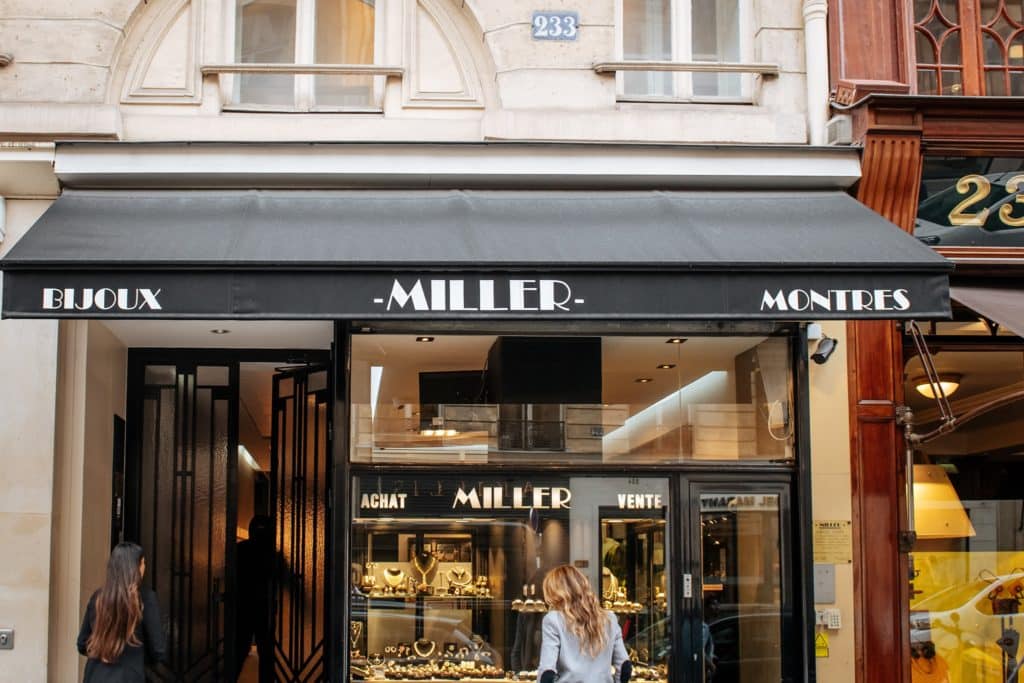
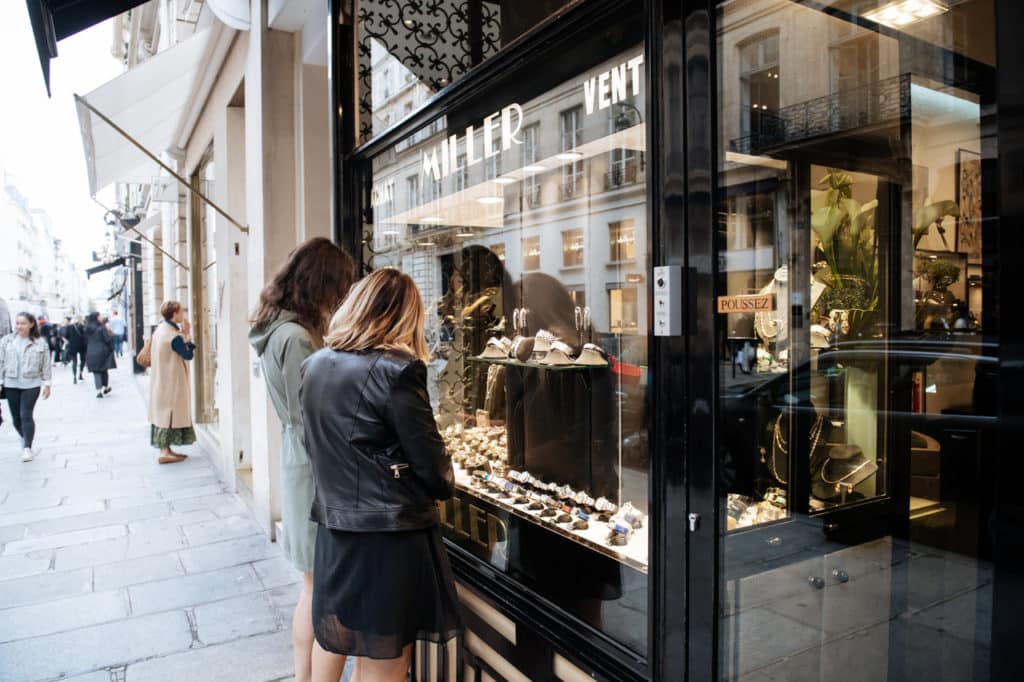
Miller Paris, une maison discrète et pourtant si bien implantée. Ici pas de publicités tapageuses mais au contraire des bijoux choisis avec soin autant pour leurs signatures que pour ce qu’ils racontent. Porteurs d’histoires, ils continuent d’exister dans l’une des plus anciennes boutiques parisiennes dédiée aux bijoux vintages. A force de passer devant la boutique et de regarder les vitrines, j’ai eu envie de rencontrer Sarah qui dirige désormais cette maison familiale qui va bientôt fêter ses quarante ans. Glissons-nous chez Miller pour découvrir l’envers du décor et les secrets d’une si belle longévité.
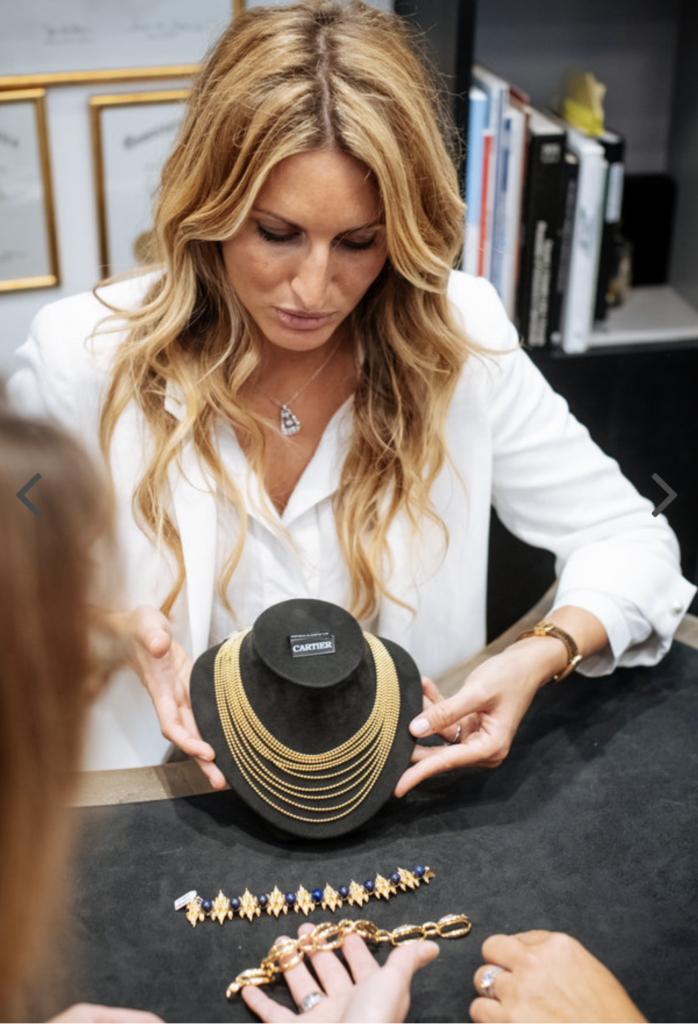
1-Pouvez-vous vous présenter en quelques mots à nos lecteurs ?
Je m’appelle Sarah, j’ai 35 ans. Je suis cheffe d’entreprise, gemmologue diplômée du GIA et mère de trois enfants.
Je dirige aujourd’hui la Maison Miller, une bijouterie familiale spécialisée dans l’achat, la vente et l’expertise de bijoux et de montres de luxe de seconde main. C’est une maison où se mêlent passion, transmission familiale, exigence et, surtout, une relation humaine très forte avec nos clients.
2-Quel métier vouliez-vous faire petite ? Et quel métier faites-vous aujourd’hui ?
Petite, j’ai eu mille idées en tête. Plus que le métier en lui-même, ce qui m’animait profondément, c’était l’envie d’entreprendre. Ayant grandi avec deux parents commerçants et entrepreneurs, cette fibre a toujours été très naturelle pour moi. J’ai donc suivi une école orientée entrepreneuriat, avec beaucoup de projets innovants en tête.
Puis, après une discussion familiale, l’idée de reprendre l’entreprise s’est imposée comme une évidence. Aujourd’hui, je suis cheffe d’entreprise et gemmologue, à la tête de la Maison Miller.
3-Quel est votre parcours et comment êtes-vous arrivée dans la joaillerie ?
J’ai toujours été baignée dans l’univers de la joaillerie. Depuis toute petite, j’entendais ma mère parler de son métier, de ses expertises, de ses découvertes. Elle m’a transmis cette passion presque naturellement. Mais avant de rejoindre l’entreprise familiale, il était essentiel pour moi d’aller voir ailleurs. J’ai toujours pensé qu’il fallait se confronter à d’autres méthodes, d’autres exigences, et parfois
travailler « à la dure » pour se forger une véritable légitimité.
J’ai ainsi effectué plusieurs stages chez des confrères et à l’international : à Londres, chez un confrère, chez Christie’s à Genève, sur des salons comme celui de Hong Kong, ainsi qu’au sein de la boutique Van Cleef & Arpels à Paris. Ces expériences ont été déterminantes. Elles m’ont permis de comprendre différentes approches du métier, du marché du luxe et d’une clientèle très exigeante. Après des études de commerce, un master en entrepreneuriat et un diplôme en gemmologie au GIA, reprendre Miller est devenu une évidence.
4-Une journée classique chez Miller, ça ressemble à quoi ?
Il n’existe pas vraiment de journée type, et c’est justement ce qui fait la richesse de ce métier. Chaque personne qui pousse la porte de la boutique apporte avec elle une histoire, un bijou, une époque. Il n’y a jamais de routine. Une journée peut être rythmée par des expertises en boutique ou à domicile, des conseils personnalisés, des échanges avec des clients sur les réseaux sociaux, ou encore la recherche de pièces rares et vintage pour répondre à une demande précise. La réactivité est essentielle, tout comme l’écoute.
5-Comment faire perdurer une maison de presque 40 ans tout en la renouvelant ?
En conservant la même éthique, la même exigence et la même « graine », tout en la faisant évoluer avec son époque. Les valeurs fondatrices de Miller n’ont jamais changé, mais les outils et les canaux, eux, évoluent constamment. Tradition et modernité ne s’opposent pas : elles se complètent.
Il y a environ huit ans, j’ai initié la digitalisation de la Maison Miller, notamment à travers Instagram et le développement de notre site e-commerce. Cette visibilité digitale a permis d’augmenter fortement l’activité tout en attirant une nouvelle clientèle, plus jeune et internationale.
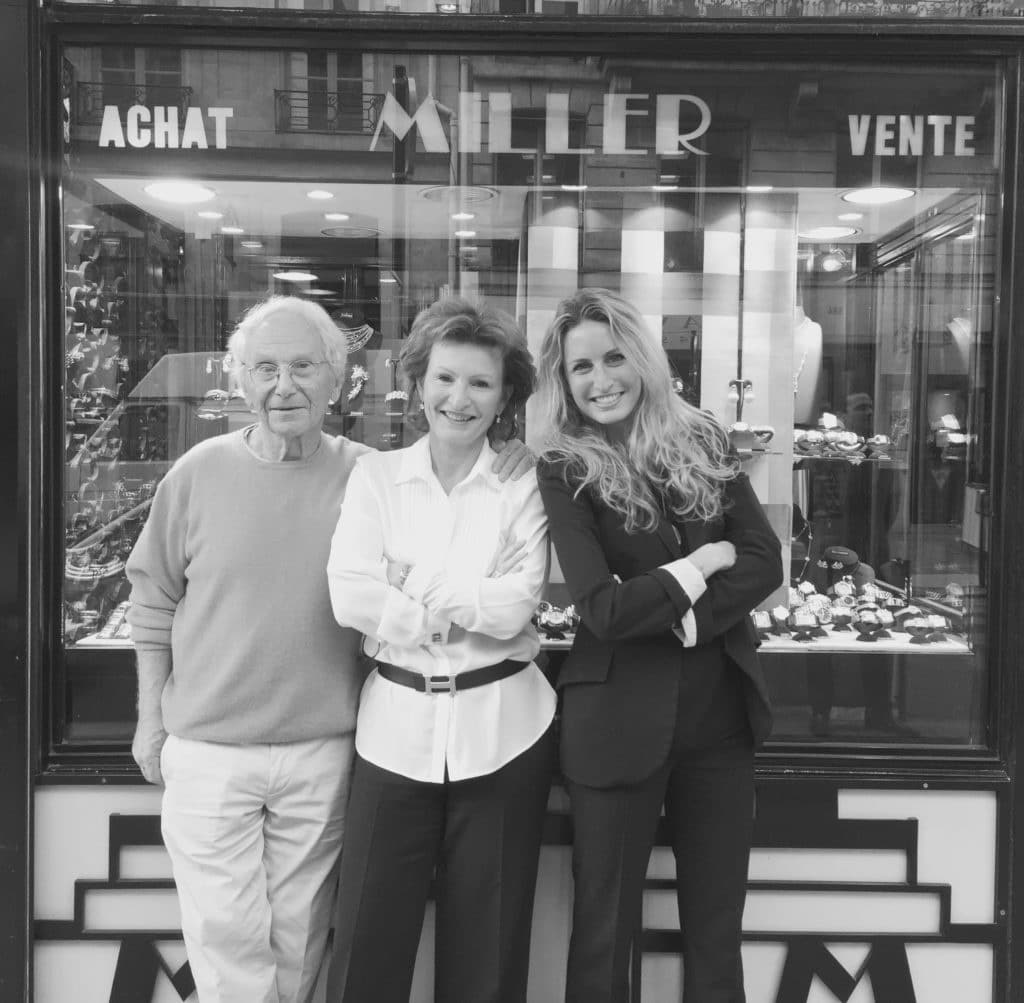
6-How are you adapting to the new competition?
Competition is fiercer today than it was a few years ago. I have chosen, alongside certain players, to work in partnership rather than in opposition. There is business for everyone. This competition drives us to excel and aim ever higher. Our strength lies in our heritage – over 40 years of history – our location at the heart of the global luxury jewellery industry, and above all our selection. We don’t buy everything: every piece is carefully chosen, based on trends and the expectations of our clientele. We prioritise quality over quantity. We have also chosen to remain a boutique-style business, so as to maintain a special bond with our customers. Many are regulars; some have become friends.
7-Have the internet and social media changed the way you operate?
Yes, completely. Social media has become essential to our strategy.
When I arrived, Miller was already one of the first houses to have a website, but it was merely a showcase site. Today, we’ve moved into e-commerce, which has profoundly transformed our organisation. Social media, and Instagram in particular, allow us to give a behind-the-scenes look, explain what we do and build a strong connection with our customers. Many people discover our new arrivals every day via our stories. They’ve also made us visible to an international clientele. I sometimes reply to customers on Instagram very late at night: responsiveness has become essential, and some are still surprised to be able to chat with us at 11 pm.
8-What are your favourite jewellery houses and periods?
My favourite houses are Cartier, Van Cleef & Arpels and Bulgari. I also really like Buccellati for its Italian refinement.
My favourite period remains Art Deco, for its symmetry, geometric precision and exceptional colour palette. I also appreciate the 1970s, a very distinctive period, featuring stones such as chrysoprase, coral and lapis lazuli.
I also have a particular fondness for lesser-known houses such as Boivin and Belperron, much loved by connoisseurs, whose pieces are often true works of art and sound investments
9-La pièce la plus marquante de l’histoire de la maison ?
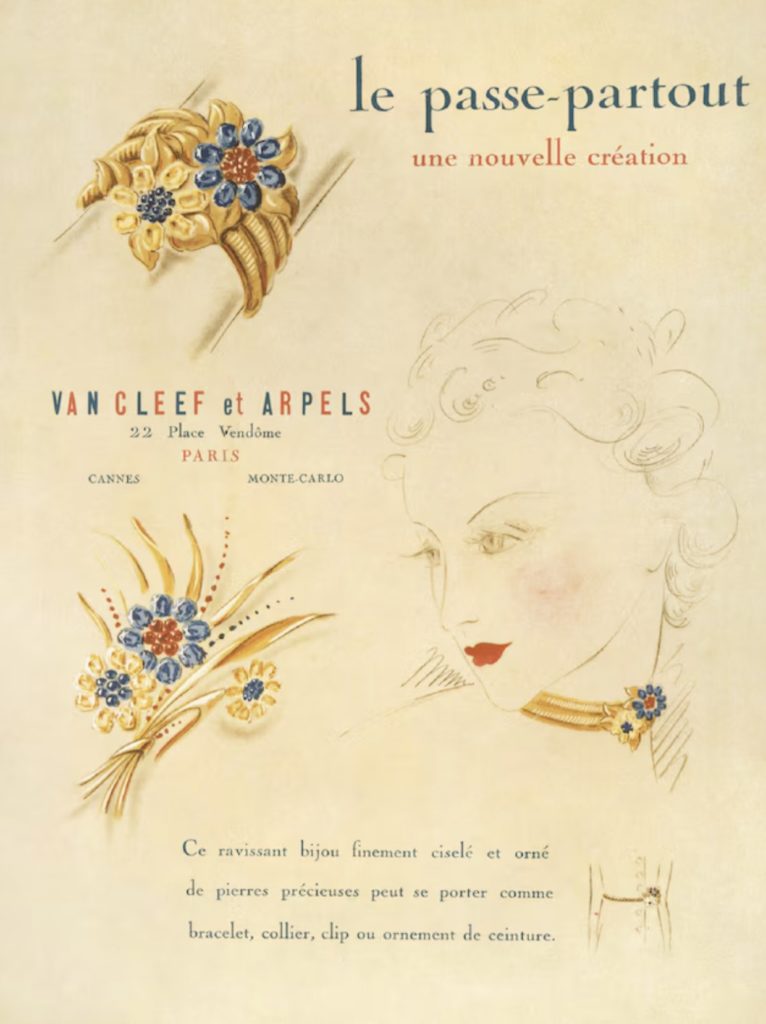
Ma mère a un jour vendu une pièce transformable exceptionnelle des années 50, signée Van Cleef & Arpels. Il s’agissait d’un bijou dit « passe-partout », imaginé autour des années 1940, pouvant se transformer en bracelet, broche ou collier. C’est une pièce emblématique du patrimoine de la maison, qui incarne parfaitement l’élégance, l’ingéniosité et l’histoire joaillière que nous aimons défendre.
10-Notez-vous une évolution dans les goûts de vos clients ?
Oui, les goûts évoluent sans cesse, au rythme des modes, des saisons et des périodes. On observe notamment des cycles autour des couleurs de l’or : jaune, blanc, rose. Actuellement, l’or jaune est très recherché. Les bijoux qui se vendent le mieux restent toutefois ceux des grandes maisons de la place Vendôme, dont la valeur est intemporelle.
11-Avez-vous une anecdote marquante à partager ?
Une anecdote m’a particulièrement marquée. Un jour, une cliente est venue avec une simple boîte à chaussures remplie de bijoux. La majorité était de la fantaisie, mais une petite broche a attiré l’attention de ma mère, qui procédait alors à l’expertise. J’étais assise à côté d’elle et je me souviens très bien de ce moment. La broche n’était pas signée, comme souvent chez certaines grandes créatrices, mais son style était immédiatement reconnaissable pour un œil averti. Il s’agissait en réalité d’une broche Belperron, d’une grande valeur.
Cette histoire rappelle qu’il ne faut jamais aller trop vite dans une expertise, et que le bijou vintage est un métier à part entière. Ma mère m’a transmis de nombreuses histoires de ce type, que nous aimons d’ailleurs partager sur notre compte Instagram, à travers les coulisses et les souvenirs de la Maison Miller
12-Quels sont vos projets pour 2026 et les années à venir ?
Continuer à développer la partie en ligne de Miller tout en offrant un service d’exception en boutique. Nous souhaitons continuer à sourcer les plus belles pièces, affiner encore notre sélection et maintenir un niveau d’exigence très élevé. Nous allons également entreprendre des travaux au sein de la boutique, afin d’améliorer l’accueil de notre clientèle et de faire évoluer le lieu.
Enfin, un moment important nous attend : la célébration des 40 ans de la Maison Miller.
13-Quel regard portez-vous sur l’industrie et son avenir ?
Je suis très optimiste. La montée du cours de l’or montre que le bijou reste une véritable valeur refuge. La seconde main est désormais pleinement entrée dans les mœurs, largement démocratisée, notamment grâce aux plateformes en ligne. Les clients recherchent à la fois des pièces rares et introuvables, mais aussi des opportunités d’investissement ou de belles affaires, avec des prix plus attractifs que dans le neuf.
14-Quels conseils donneriez-vous à un jeune qui veut travailler dans ce secteur ?
Être curieux de tout. C’est un métier qui demande du temps, de l’expérience et beaucoup d’humilité. Il faut chiner, observer, se tromper, apprendre à former son œil. Une formation en gemmologie, idéalement à l’international, est essentielle. C’est un métier de passion, qui nécessite de nombreuses années avant de pouvoir se considérer
A bientôt !