Anyone who has stepped inside a jewellery workshop will have noticed this distinctive feature. There is almost always an Armenian to be found within its walls. Whether they are of Armenian nationality or a descendant of the diaspora, you are almost certain to meet someone whose Armenian culture is deeply ingrained in their very being. Their prominence in the jewellery trade is no coincidence. And this one – from metalwork to gemstones – are so deeply intertwined with their history that it is estimated that almost 10% of the world’s jewellery is crafted by someone of Armenian heritage. The question is to understand the reason behind this presence.
When I first dipped my toes into the jewellery trade, and more specifically in Paris’s 9th arrondissement, I noticed their presence was inseparable from both the neighbourhood and the trade. And I asked questions to which I received few answers. Because gaining their trust takes time, because this community speaks little, because the context of their presence in Paris is still painful, even traumatic, for many of them, because the current situation reveals – again and again – the fragility and the unimaginable resilience demonstrated by this people. So, faced with a lack of answers, I searched, read, questioned, investigated and traced the history of their presence in this small geographical area that is the Faubourg Montmartre district in Paris. This work formed the basis of my first-year Master’s degree at the University of Le Mans.
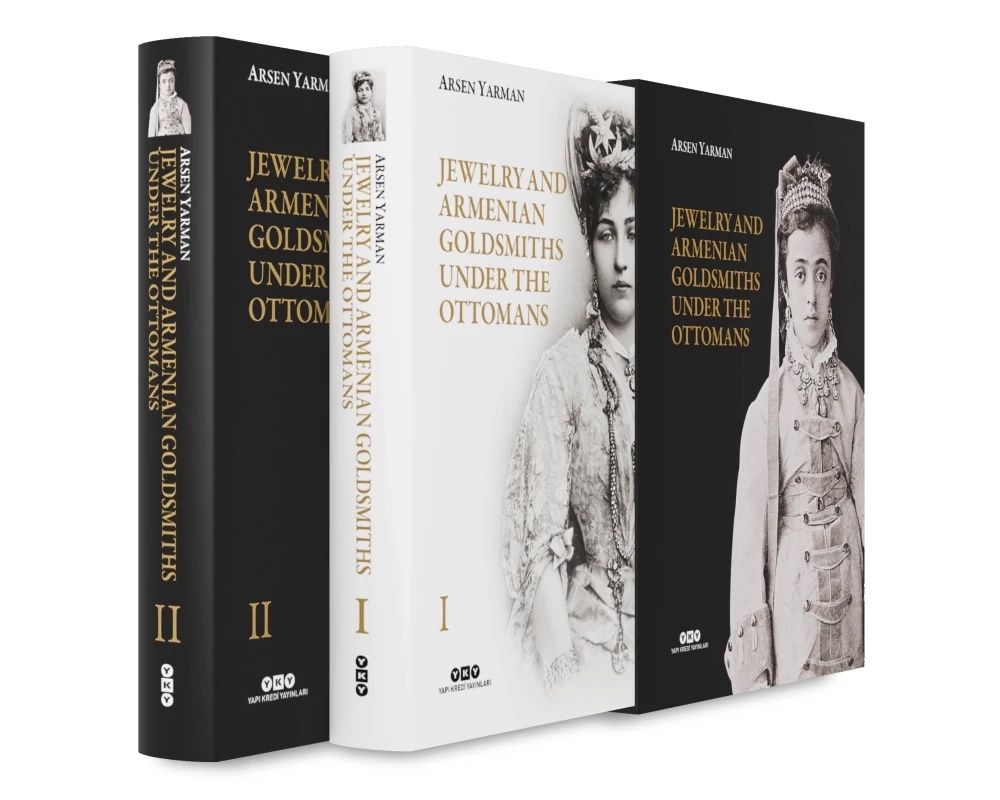
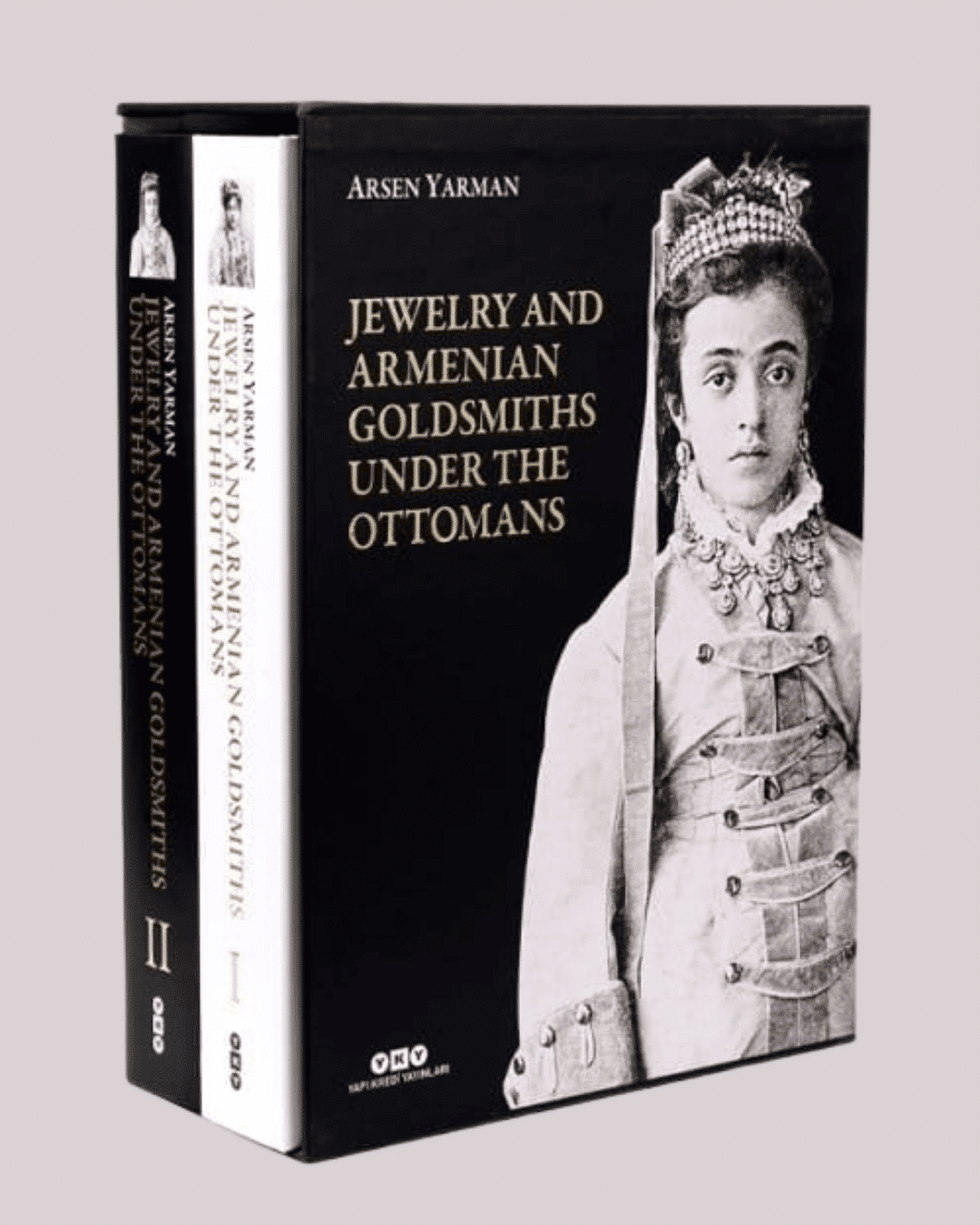
Working on the Armenians and jewellery fills me with constant joy. Telling this story took time and a good dose of patience, as this work is largely uncharted territory. So, I had to find sources, not only in France but also in Turkey, and more specifically in what was still known as the Ottoman Empire. And during my journey, I came across a book essential to understanding this community: that of Arsen Yarman.
His book is an exception in the publishing world. An anomaly, even. For in recent years, nothing comparable in terms of research, precision, illustration and historiography has been published in the history of jewellery (as distinct from art history), with the exception of very rare academic works. When I first handled this book, it had not yet been translated into English and existed only in its first edition: namely, in Turkish. I first came across it when I went to meet the curator of the Nubar Library at the UGAB premises in Paris. Indeed, my research into Armenian jewellers had encountered an initial challenge: contextualising the families within the Ottoman Empire, and more specifically in Constantinople.
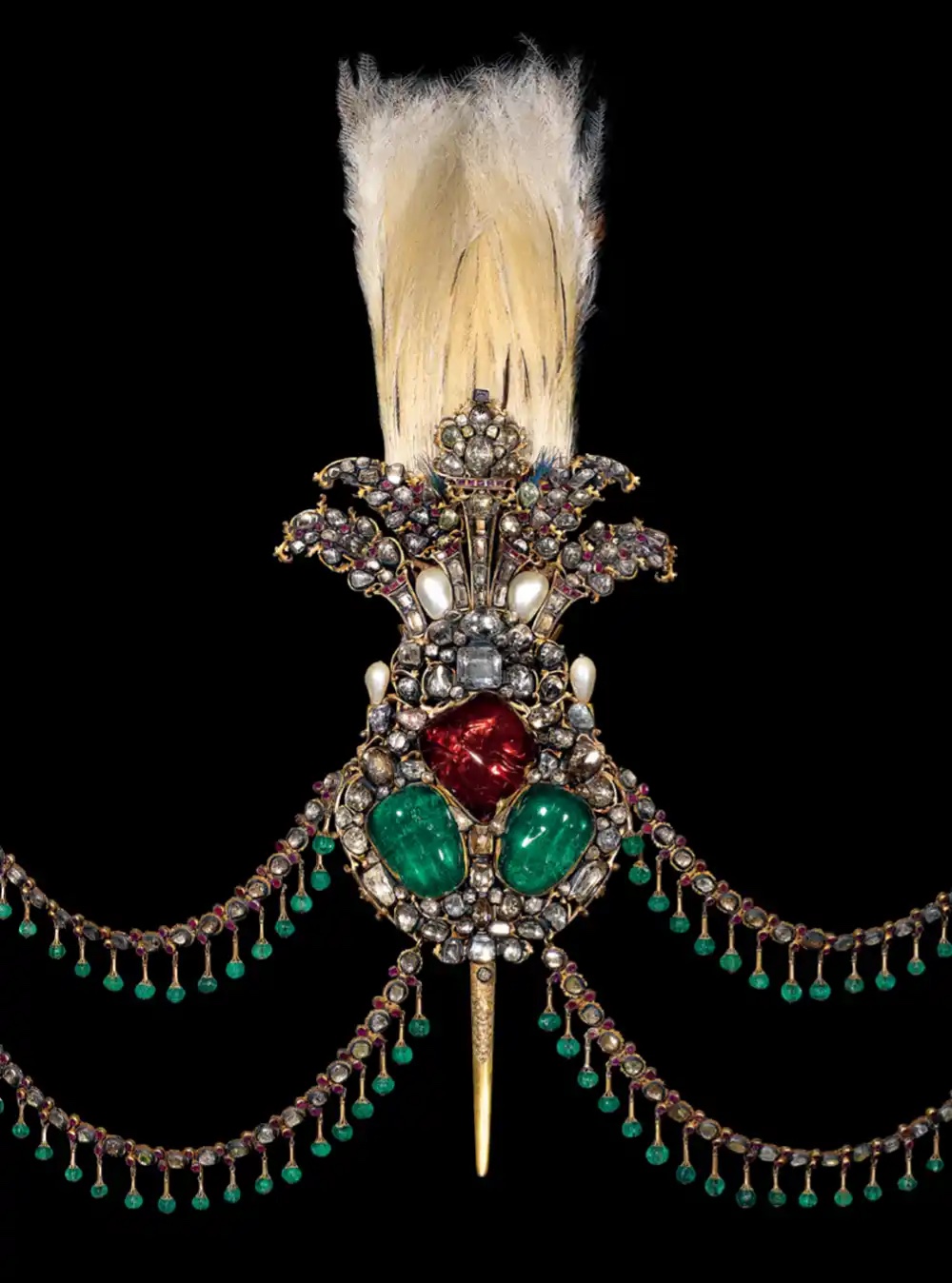
And it was here that the book *Jewellery and Armenian Goldsmiths under the Ottomans* enabled me to take a path I never thought I would be able to traverse, and to immerse myself in what Constantinople was like between the 16th and 19th centuries. And what a fabulous journey! Thanks to his research and meticulous analysis, the roots of the families I was investigating in France was revealed to me: the Eknayans, the Hampartzunians, the Biberians, the Boghossians, the Boyadjians, the Djevahirdjians, the Dikranians, the Esmerians, the Nercessians, the Pouldjians, the Fringhians and the Haroutiunians, to name but a few of the hundreds of people I had been studying. For above all else, a book is judged by the quality and accuracy of its Index, and nothing, absolutely nothing, can beat the one compiled by Arsen Yarman, which runs to almost 39 pages. The sheer volume of entries, possibilities, surnames and first names allows us to paint a portrait of immense richness of the families whose surnames are inextricably linked to the creation of masterpieces of jewellery. In total, there are almost 2,000 names available, enabling you to trace the origins of an object or piece of jewellery crafted by an Armenian artisan from the Ottoman Empire. Quite simply, it is a bible. Nothing less.
To understand the importance of Armenians in the international trade in precious metals, one must look back through history over many centuries and examine the earliest sources that already mention this people as inseparable from this trade. Therefore, before turning his attention to Constantinople and its significance, Arsen Yarman has synthesised in his work the research of numerous historians who have examined the presence of Armenians along the Silk Road and the political context of the Armenian territory. This first part of Volume I is crucial to understanding how and why this people established themselves through favourable laws, political contexts, and also commercial and financial alliances that enabled the Armenian people to rise to prominence in the jewellery and gemstone trade. For this is indeed one of the distinctive features of this community: it controls the entire jewellery manufacturing chain. And it is precisely this expertise that they would bring to Paris from the late 19th century onwards, when the Armenians challenged the established order and reshaped the trade: supplying high-quality materials that were either unavailable or rare in France, expertise in trading and cutting, and a commercial boldness that saw them approach the major players (the great jewellers and the most important clients) to assert their commercial power. And long before that in Constantinople, where Armenians became the essential intermediaries for the powerful figures of the Ottoman Empire. With fine pearls, diamonds, coloured gemstones and precious metals, they reigned supreme over this trade.
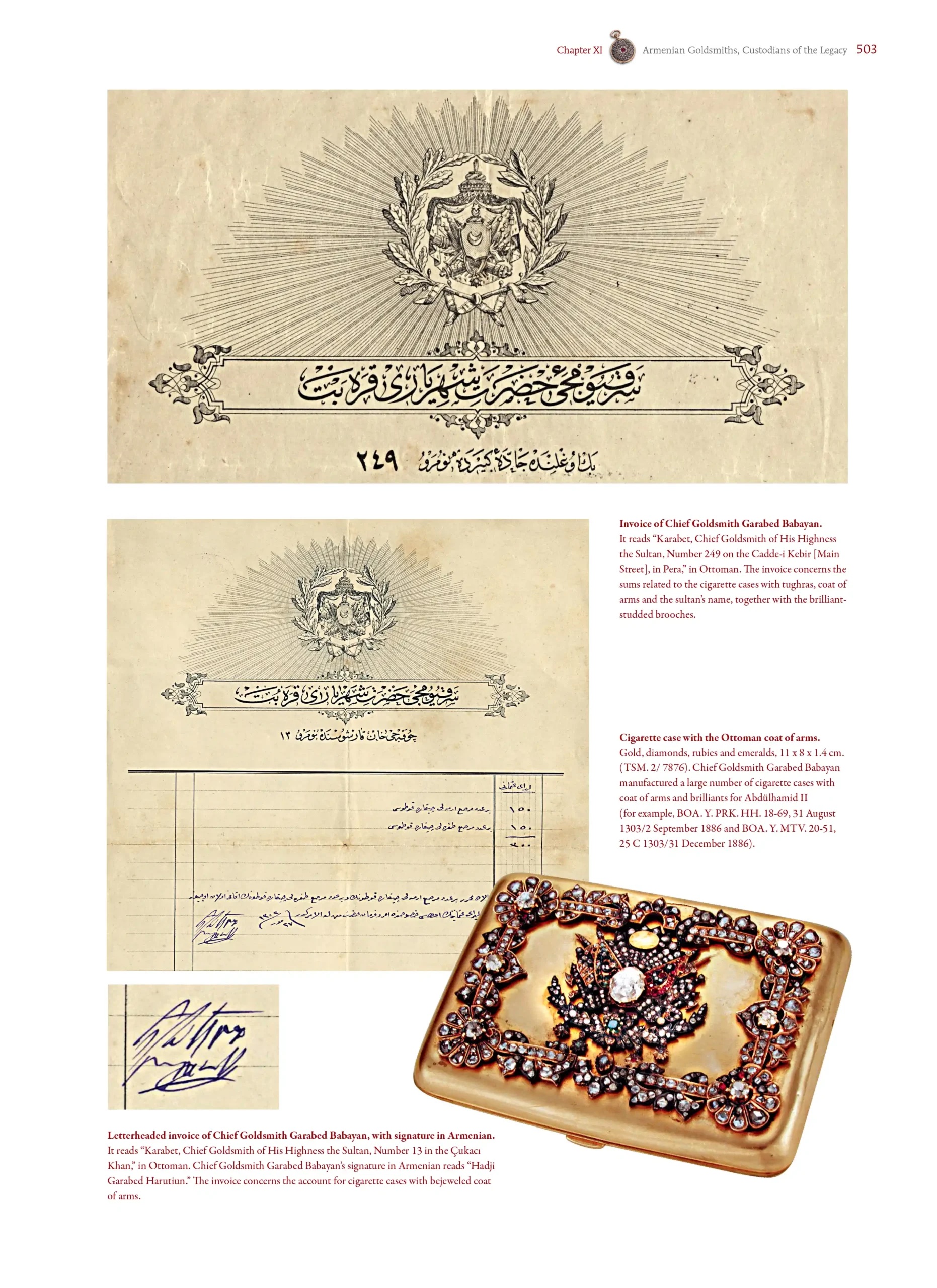
I could talk to you about this book for hours, but you really must read it and handle it to appreciate its richness. But also to understand that it tells a story hitherto denied or forgotten. Indeed, one of the defining features of the Armenian diaspora is its deep-rooted memory, but also its power of transmission—two elements inseparable from the concept of diaspora as defined by Robin Cohen, the leading theorist on population movements.
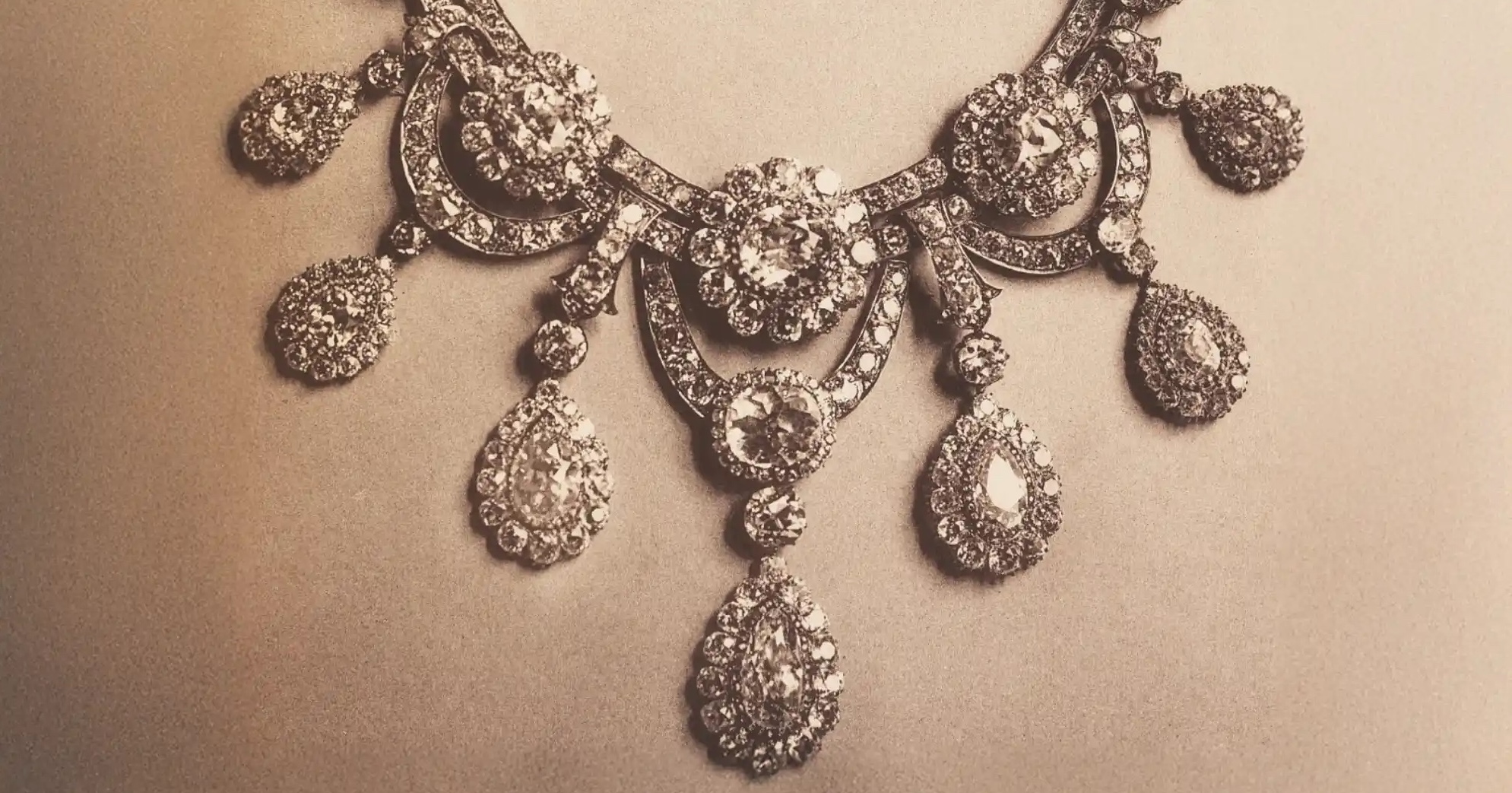
Volume II takes you on a journey to discover the jewellers: names, designs, family archives and even jewellery. You will thus be able to understand who the Mazlumyans, the Suciyans, the Torosyans, the Aznavurians and the Tchiboukdjians were, to name but a few. The second volume will also allow you to explore the links between Europe and the East, to understand how the influences between the two regions inspired the jewellers of Constantinople and those of old Europe, why the Grand Bazaar became a key supplier, and the role it still plays today.
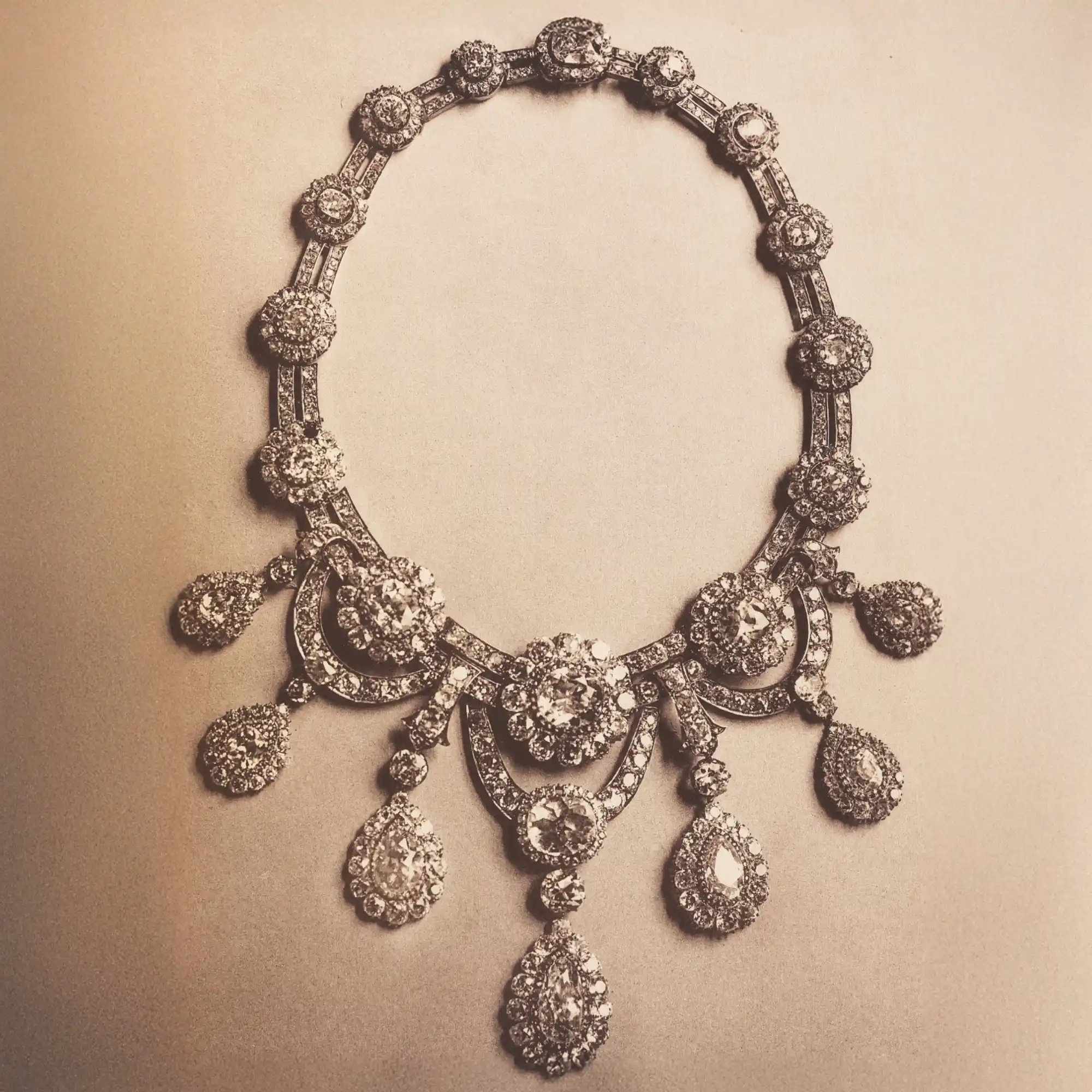
The strength of Arsen Yarman’s work lies in his having documented, through rare texts and archives, the role of the Armenian community in Ottoman jewellery, thereby revealing a history largely unknown to the general public and even to many specialists. The two books give a voice to this community, highlighting its role whilst explaining what makes it unique in the jewellery trade: a perfect blend of tradition, memory and adaptation in a constantly changing world.
The two-volume work brings together over 750 archival documents, a large proportion of which come from the author’s own collection, more than 1,200 high-quality illustrations, 300 jewellery designs, and the index I mentioned earlier, which is one of the book’s greatest strengths. It costs 500 euros to purchase, but it is an essential work for anyone wishing to understand the decisive role played by Armenians in the world of jewellery. Books of this quality are rare in the publishing world, and *Jewellery and Armenian Goldsmiths under the Ottoman Empire* is undoubtedly one of them.
See you soon!